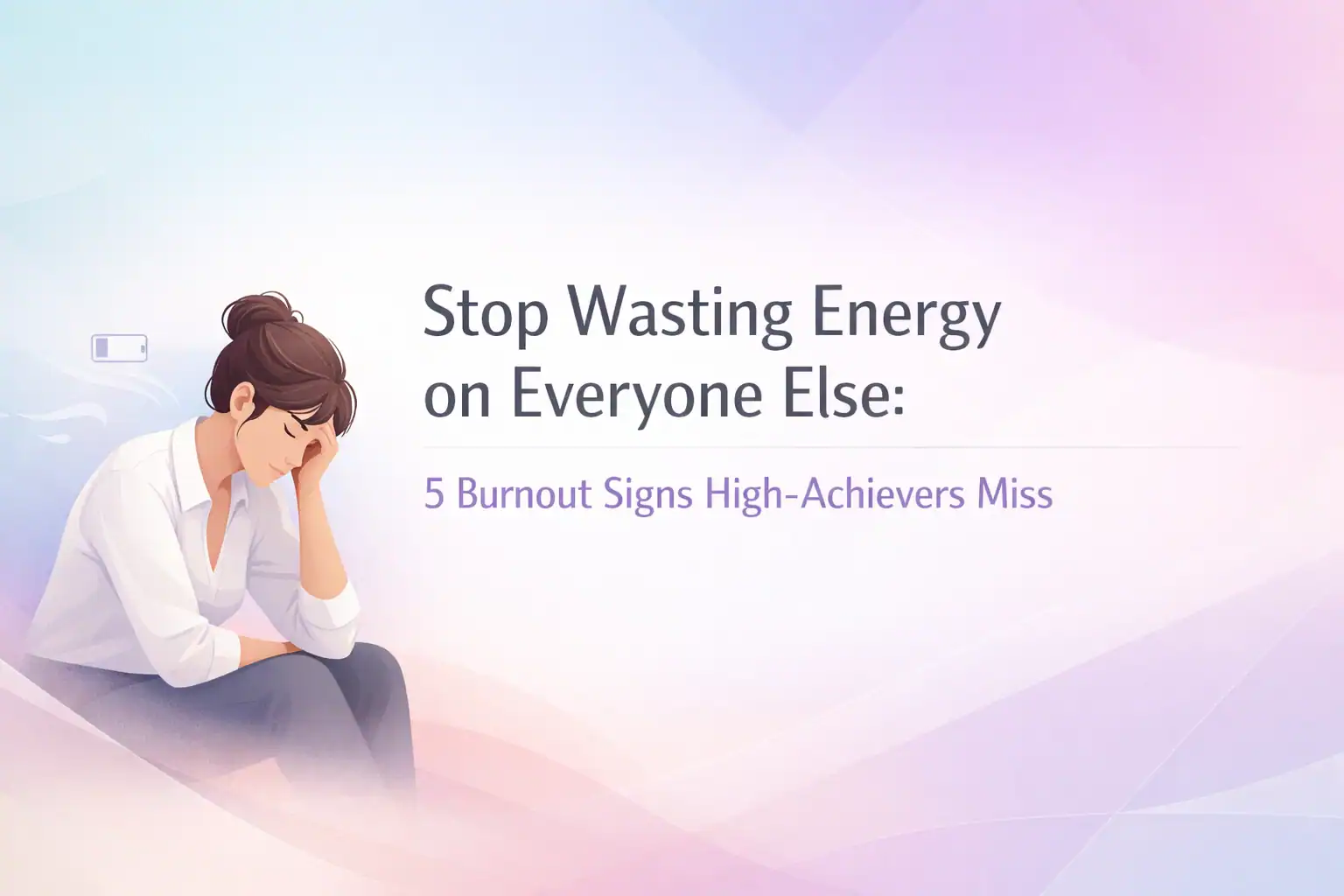
You're checking every box. Meeting every deadline. Showing up for everyone who needs you.
But something's off.
You're exhausted in a way that sleep doesn't fix. Your brain feels foggy. And you're wondering if this is just what success costs, or if something deeper is happening.
High-achievers often miss burnout signals because they keep performing at high levels while their energy and resilience erode invisibly. This pattern, known as "silent burnout," allows performance to mask underlying depletion until the damage becomes severe.
Here are five burnout signs you might be overlooking.

1. Fatigue That Rest Doesn't Touch
You sleep seven hours. You wake up tired. Coffee barely makes a dent.
This differs from normal exhaustion. Regular tiredness improves with rest. Burnout-related fatigue lingers for months and undermines your ability to recover fully. If you're awake at 3 a.m. with racing thoughts while mornings feel like running on fumes, your body is signaling distress.
The problem? High-achievers normalize this exhaustion as the cost of ambition rather than recognizing it as a warning light.
2. Brain Fog You Keep Pushing Through
Tasks that once took minutes now feel like hours. Your clarity and speed of thought slip without your awareness.
You experience decision fatigue. You struggle to concentrate. Information that used to stick now slides away. Some high-achievers report tension headaches after three or four hours of work, symptoms they push through rather than address.
This cognitive decline isn't laziness. It's high functioning anxiety manifesting as your brain's protective response to chronic overload.

3. Emotional Flatness You Can't Shake
Burnout doesn't always look like dramatic collapse. Often, it manifests as a growing sense of emotional numbness, a loss of spark, connection, and joy in both work and personal life.
You zone out in conversations. You feel indifferent during meetings. Hobbies you once loved hold no appeal. This detachment happens even while you continue meeting expectations, making it easy to dismiss as temporary stress rather than recognize it as burnout.
The danger? You keep functioning while your emotional reserves drain completely.
4. Boundaries That Keep Disappearing
High performers often take on more than they can handle to avoid letting others down or maintain appearances. This pattern stems from identity and output becoming intertwined, where dependability is rewarded while rest feels indulgent or signals weakness.
You say yes when you mean no. You answer emails at midnight. You're short-tempered with family members over small moments, then dwell on it afterward.
This over-functioning isn't strength. It's a symptom of therapy for burnout being needed before boundaries disappear entirely.

5. Physical Tension You've Stopped Noticing
Burnout shifts from your mind into your body. Persistent tension in your shoulders, jaw, or neck becomes part of your daily background. Your nervous system remains activated even during downtime.
Sleep becomes light, disrupted, or unrefreshing despite exhaustion. These physical symptoms persist despite rest, signaling burnout has progressed beyond mental fatigue into physiological dysfunction.
The critical challenge? High-achievers often normalize these signs as "just stress" because they associate struggle with success and continue delivering results. This normalization allows burnout to deepen while you maintain the appearance of thriving.
What Actually Helps
Recognizing these early warning signs allows you to reset effectively rather than waiting until performance suffers or health declines.
Women's counseling specifically addresses the unique pressures high-achieving women face: the expectation to excel professionally while maintaining relationships, managing households, and meeting everyone else's needs before their own.
Approaches like Rapid Transformational Therapy and hypnosis work at the subconscious level where these patterns formed, creating lasting change rather than temporary relief.
Your exhaustion isn't weakness. Your brain fog isn't failure. Your emotional flatness isn't who you are.
They're signals. And you don't have to wait until you crash to address them.