You’ve been sitting across from your therapist for months. Maybe years. You’ve talked through the memories, analyzed the patterns, and gained insight into your behaviors. You understand your trauma now.
So why do you still feel stuck?
If this sounds familiar, you’re not alone. Research shows that 25-50% of PTSD patients don’t experience full relief from talk therapy alone. The reason has nothing to do with your commitment to healing and everything to do with how trauma actually works in your body.
Trauma Doesn’t Live in Your Thoughts
Here’s what most people don’t realize: trauma isn’t stored as a memory you can simply think your way through. When trauma occurs, it fundamentally alters your brain structure: specifically the amygdala (fear responses), hippocampus (memory processing), and prefrontal cortex (emotional regulation).
Traditional talk therapy engages primarily your prefrontal cortex. You’re using logic, language, and cognitive understanding to process your experiences. That’s valuable work. But trauma lives deeper: in the parts of your brain connected to survival, in your nervous system, in the tissues of your body itself.
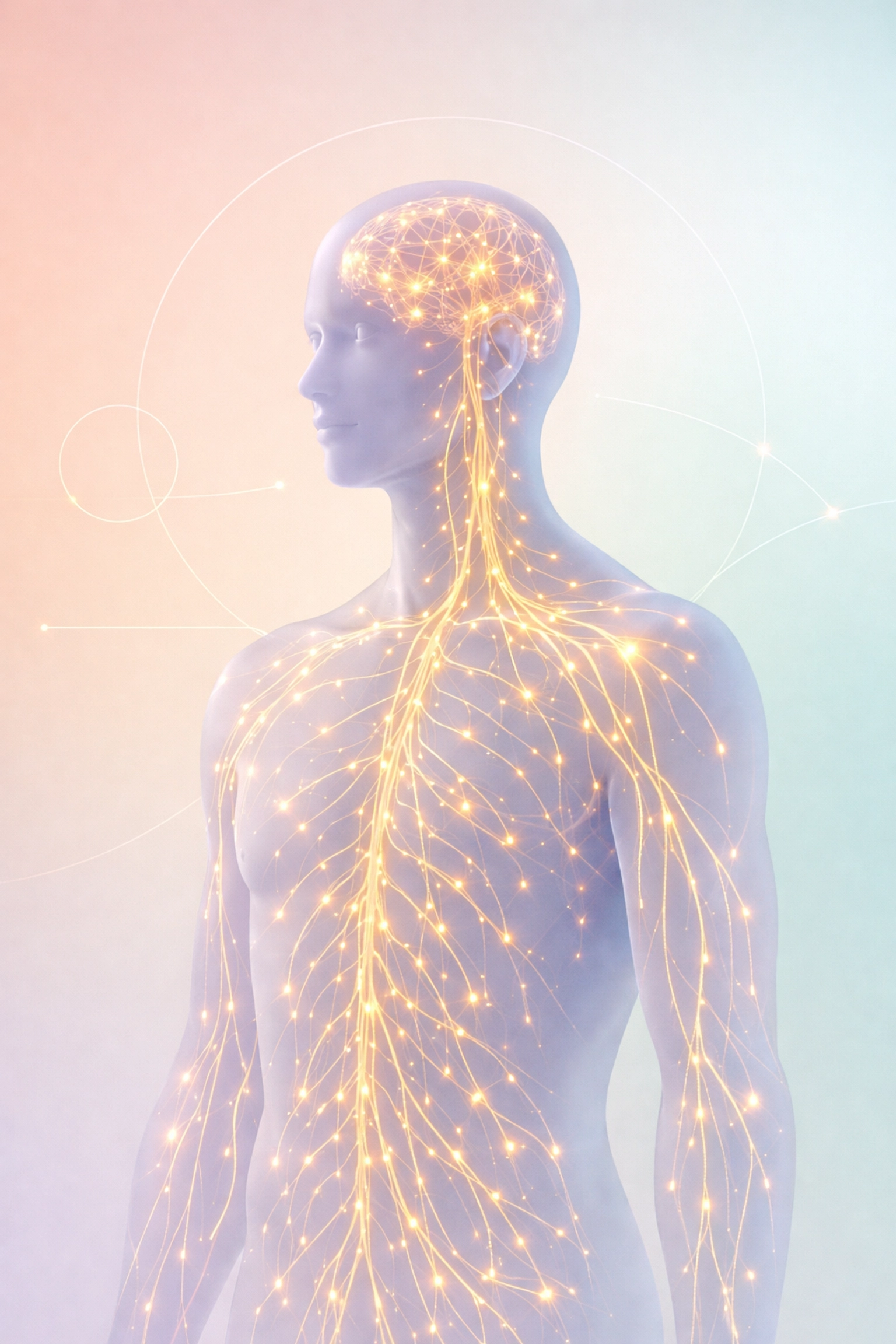
This is why you can intellectually understand what happened to you, identify all the patterns, and still wake up with anxiety. Still feel numb. Still struggle to trust. Cognitive understanding doesn’t equal nervous system healing.
When Talking About It Makes It Worse
For many trauma survivors, repeatedly recounting traumatic details during therapy sessions actually reactivates the same physiological stress response. You’re not processing the memory: you’re reliving it.
When your nervous system is dysregulated and stuck in survival mode (fight, flight, or freeze), retelling your story can lead to emotional flooding rather than relief. Your body doesn’t know the difference between remembering the trauma and experiencing it again.
This is especially true for high-achievers who’ve learned to push through discomfort. You show up to therapy, do the work, check the boxes. But your body remains in a constant state of hypervigilance or shutdown, making cognitive therapies far less effective than they should be.

What Actually Creates Healing
Effective trauma healing requires a both/and approach: addressing your nervous system and your cognitive understanding. This is where modalities like Rapid Transformational Therapy (RTT) become powerful tools.
RTT works differently than traditional talk therapy. It accesses the subconscious mind where trauma patterns are stored, allowing you to reframe experiences at a deeper level without repeatedly recounting painful details. Combined with nervous system regulation techniques, this approach creates space for genuine healing rather than just intellectual understanding.
The most effective trauma work follows this sequence:
First: Regulate your nervous system. You need to feel safe in your body before deeper processing can happen. This might include somatic practices, breathwork, or dance movement therapy that help you reconnect with physical sensations without overwhelm.
Second: Process at the subconscious level. This is where RTT and hypnotherapy shine: accessing the root of trauma patterns without the retraumatization that can come from traditional talk therapy.
Third: Integrate with cognitive understanding. Once your nervous system is more regulated, talk therapy becomes significantly more effective because your rational brain can actually “come online” to do the work.
Moving Beyond Being Stuck
If you’ve been in therapy for months or years and still feel controlled by your past, that doesn’t mean you’re broken or doing it wrong. It means you might need a different approach: one that honors you as a whole being rather than just a thinking mind.
Your trauma isn’t just a story to be understood. It’s a nervous system pattern that needs to be rewired. It’s a body that needs to feel safe again. It’s a subconscious mind holding protective patterns that no longer serve you.
True healing happens when we address all of these layers together.
If you’re ready to explore a more integrative approach to trauma healing, learn more about our holistic services that combine nervous system regulation, RTT, and somatic practices designed specifically for high-achieving women ready to move beyond just talking about their trauma.
You’ve done the hard work of understanding. Now it’s time to heal.